
Newsletter Subscribe
Enter your email address below and subscribe to our newsletter

 ByJohn A
Artificial intelligence in audio editing automates core tasks while preserving creative intent across sessions. Systems denoise, analyze spectra, monitor in real time, and support non-destructive edits with traceable parameter histories. Professionals supervise adjustments, ensuring consistency and collaboration without workflow disruption. The balance among fidelity, intelligibility, and feasibility hinges on perceptual models and transparent benchmarks. Clear documentation, bias mitigation, and explicit checks safeguard sonic direction, inviting practitioners to consider implications before proceeding to the next step.
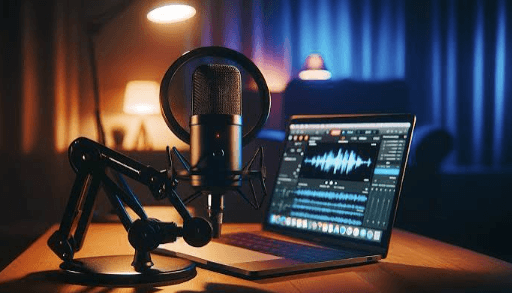
Artificial intelligence in audio editing automates and augments several core tasks that traditionally require manual intervention. The subsystem analyzes spectral content, tonal balance, and dynamics to apply AI driven denoising with minimal artifacts. Real time monitoring enables clinicians and engineers to supervise adjustments live, ensuring non-destructive edits, consistency across sessions, and collaborative fine-tuning without compromising creative intent or workflow efficiency.
Effective measurement of audio quality in AI-assisted workflows requires a clear mapping between objective metrics, perceptual relevance, and practical trade-offs. The discussion centers on tools for objective assessment, perceptual models, and reproducible benchmarks. It analyzes quality trade offs, cross-validation, and latency implications, balancing fidelity, intelligibility, and real-time feasibility while supporting collaborative decision-making and transparent reporting for diverse stakeholders.
Sampling techniques, Denoising strategies
While the allure of automated enhancements can tempt rapid gains, practitioners must anticipate key pitfalls that can undermine audio quality and creative intent.
Collaboration highlights the need for explicit decision transparency, documenting parameter choices and preservation of original intent.
Awareness of AI bias, safeguarding user agency, and deliberate checks maintain creative control, ensuring consistent results without eroding sonic integrity or stylistic direction.
AI copyright and ownership rights hinge on human authorship creation; AI suggestions replace human judgment only if not substantially contributed by the artist. Best AI tools, AI data security, detectability of AI edits in final mix, support compliance.
AI recommendations cannot fully replace human judgment in creative decisions; artificial intelligence augments, not substitutes, creative judgment. It supports human collaboration, enabling refined choices, while preserving authorship and freedom through collaborative decision-making and transparent AI-assisted workflows.
A notable 62% rise in tool adoption guides genre-specific pipelines. AI tools streamline workflows across genres, while AI edits raise copyright ownership considerations; collaboration remains essential. Analysts recommend evaluating genre-specific capabilities, licensing terms, and workflow integration for optimal outcomes.
See also: toyotatechnology
Online AI services vary in data security; robust providers implement encryption, access controls, and data isolation, but privacy risks persist from data retention and model training. Collaborative assessment is essential to balance freedom with mitigated data exposure.
AI-generated edits may be detectable in the final mix, depending on processing transparency and spectral fingerprints; AI detection tools flag anomalies. AI ethics require user consent for disclosure and collaboration, balancing freedom with responsible, auditable production practices in the final mix.
In the quiet studio, AI acts as a compass carved from glass—transparent yet decisive. It traces spectral currents, recordings of intent, guiding engineers without muting their hand. Metrics glow like calibrated beacons, revealing fidelity and separation, while parameters drift like sand through an hourglass, urging documentation. Collaboration remains the true conductor; AI, the instrument. When safeguards anchor workflow, creative control persists, and sonic vision travels unbroken from concept to capture.



[…] See also: Artificial Intelligence in Audio Editing […]